
 Image 1 of 1
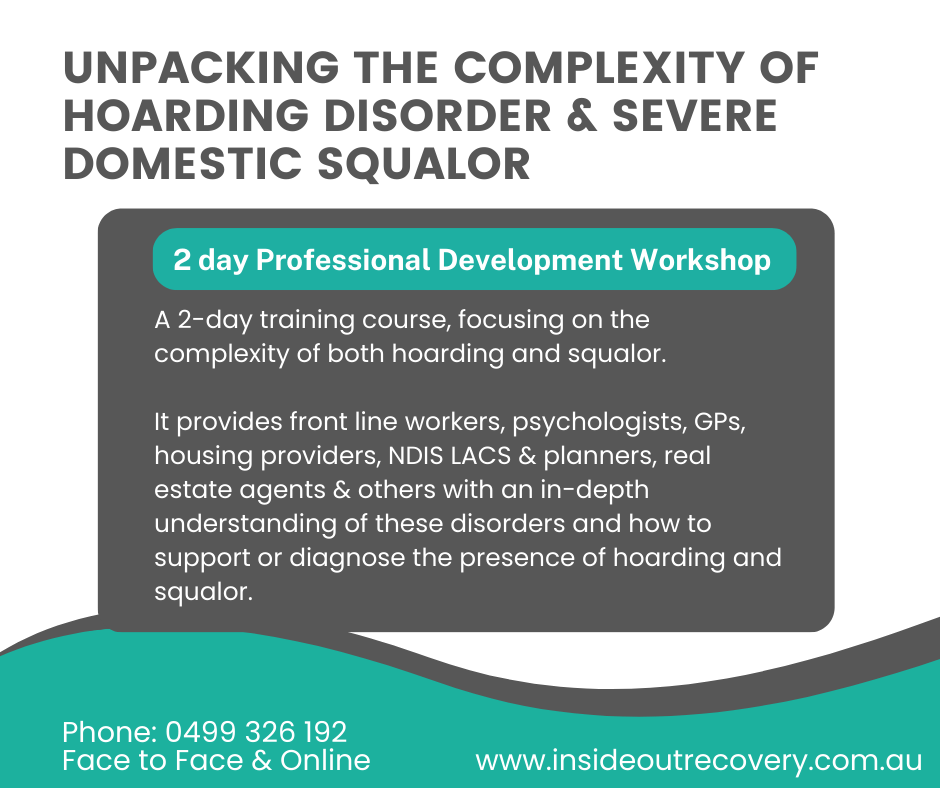
Unpacking the Complexity of Hoarding Disorder and Severe Domestic Squalor
Hoarding and squalor are becoming more common. It is estimated that as many as 600,000 Australians may be living with significant clutter or severe domestic squalor, which equates to roughly 2.6% of the population. In many cases, workers only encounter these situations while assisting consumers with other concerns and can find it difficult to know how best to engage with and support people affected by these issues. This training will provide workers with the skills to understand Hoarding Disorder (HD) and Severe Domestic Squalor (SDS) by exploring the psychology of clutter and the personal beliefs people hold about their possessions. The group will also review the DSM-5 criteria for these diagnoses. That theoretical foundation will be reinforced through practical work with intervention models, self-assessment tools and questionnaires, and proven strategies and tools for effective, compassionate practice.
Unpack the psychology of HD and SDS and beliefs about possessions
Look at the diagnosis of HD and SDS as described in the DSM-5
Explore which interventions work and which are less effective
Outline intervention models
Explore the use of self-assessment and questionnaires
Frontline workers, case workers, mental health workers, family workers
Group bookings: Min 6, max 20
In person
Unpacking the Complexity of Hoarding Disorder and Severe Domestic Squalor
Hoarding and squalor are becoming more common. It is estimated that as many as 600,000 Australians may be living with significant clutter or severe domestic squalor, which equates to roughly 2.6% of the population. In many cases, workers only encounter these situations while assisting consumers with other concerns and can find it difficult to know how best to engage with and support people affected by these issues. This training will provide workers with the skills to understand Hoarding Disorder (HD) and Severe Domestic Squalor (SDS) by exploring the psychology of clutter and the personal beliefs people hold about their possessions. The group will also review the DSM-5 criteria for these diagnoses. That theoretical foundation will be reinforced through practical work with intervention models, self-assessment tools and questionnaires, and proven strategies and tools for effective, compassionate practice.
Unpack the psychology of HD and SDS and beliefs about possessions
Look at the diagnosis of HD and SDS as described in the DSM-5
Explore which interventions work and which are less effective
Outline intervention models
Explore the use of self-assessment and questionnaires
Frontline workers, case workers, mental health workers, family workers
Group bookings: Min 6, max 20
In person