Professional Development & Training
Training, Workshops & Courses
Inside Out Recovery offers professional development, full day workshops and accredited suicide prevention training. All training programs & workshops can be delivered face to face Australia wide or via Zoom
We provide training throughout Australia for a variety of sectors, including NDIS, Non-NDIS, My Aged Care, Health NSW, psychologists, frontline workers, and anyone seeking to enhance their skills, knowledge, and understanding of how to support individuals living in cluttered environments.
Courses & Workshops
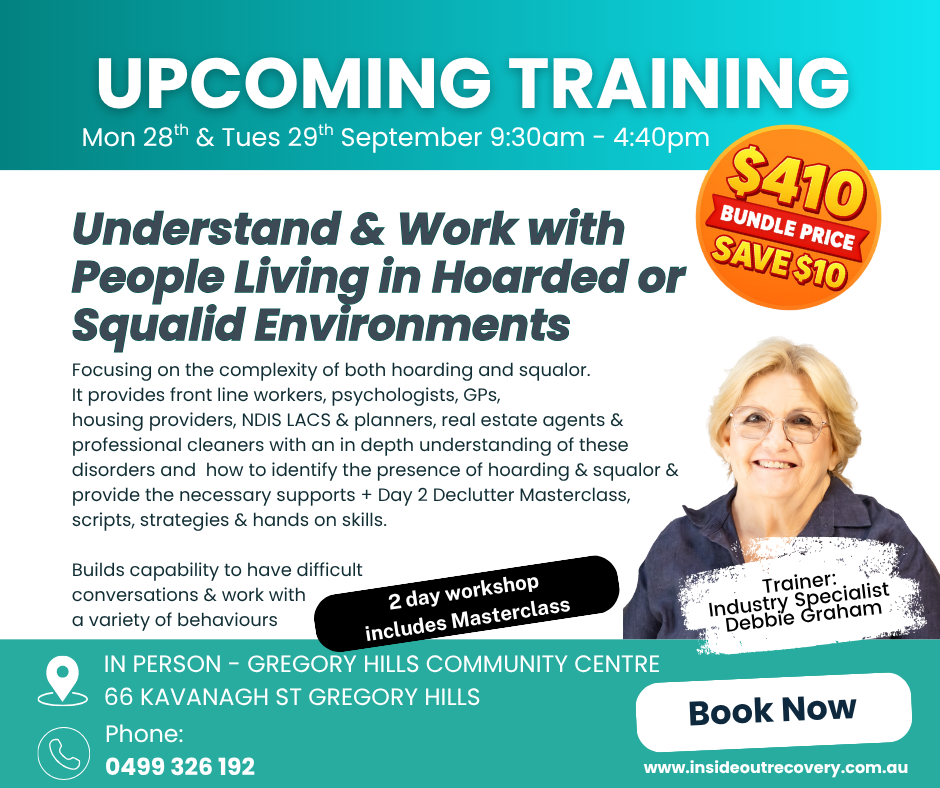
Back by popular demand is our 2 day workshop.
Day 1 of the Workshop provides the theoretical foundations of working with people living in hoarded & squalid environments, the psychology, trauma dynamics, risk factors, and behavioural patterns behind hoarding and squalor.
A deep, trauma informed exploration of the emotional, psychological, and behavioural drivers behind hoarding and squalor.
Workers gain the insight, empathy, and frameworks needed to understand complexity, reduce stigma, and recognise risk.
Learning Outcomes
Understand the psychological foundations underpinning hoarding and squalor
Identify trauma dynamics and their role in the development and maintenance of hoarding behaviours
Recognise key risk factors associated with hoarding and severe domestic squalor
Explore common behavioural patterns linked to hoarding and squalor presentations
Develop a trauma informed understanding of the emotional and psychological drivers behind hoarding
Build insight into the complexity and multifaceted nature of hoarding and squalor
Strengthen empathy when working with individuals experiencing hoarding and squalor
Apply practical frameworks to support assessment and intervention
Reduce stigma through informed, compassionate practice
Identify and respond to risk factors to support safer outcomes for clients and communities
Day 2 is the Masterclass, practical application: the scripts, strategies, and hands on skills workers need to support clients with emotional attachment, avoidance, and entrenched behaviours, experiencing emotional attachment, avoidance, shame, and overwhelm. Includes scripts, strategies, session structure, and guided practice.
Learning Outcomes
Apply practical, trauma‑informed skills in one‑on‑one client work
Work effectively with emotional attachment
Navigate avoidance, overwhelm, and stuck points
Understand Duty of Care vs Dignity of Risk in real scenarios
Strengthen professional boundaries and sustainable self‑care
Build collaborative, respectful partnerships with clients
Next dates:
Monday 28th & Tuesday 29th September
Time: 9:30am - 4:30pm both days
Location: Gregory Hills Community Centre—66 Kavanagh St Gregory Hills
Cost $410
(Saving $30 as bundle, usually $440)
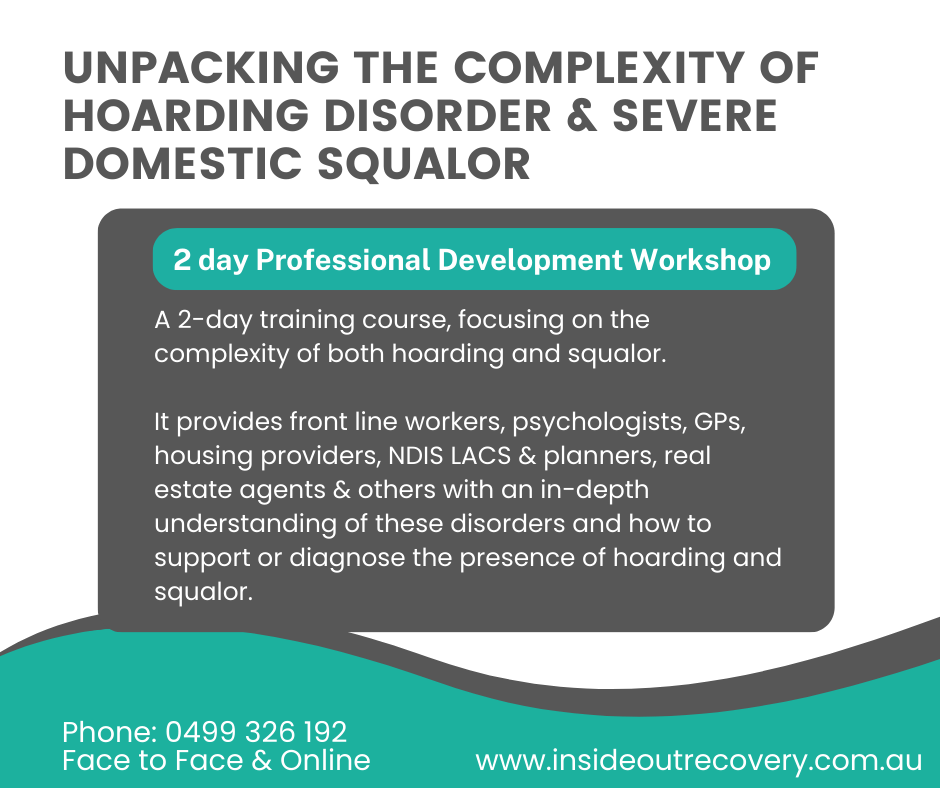
Unpacking the Complexity of Hoarding Disorder and Severe Domestic Squalor
Hoarding and squalor are becoming more common. It is estimated that as many as 600,000 Australians may be living with significant clutter or severe domestic squalor, which equates to roughly 2.6% of the population. In many cases, workers only encounter these situations while assisting consumers with other concerns and can find it difficult to know how best to engage with and support people affected by these issues. This training will provide workers with the skills to understand Hoarding Disorder (HD) and Severe Domestic Squalor (SDS) by exploring the psychology of clutter and the personal beliefs people hold about their possessions. The group will also review the DSM-5 criteria for these diagnoses. That theoretical foundation will be reinforced through practical work with intervention models, self-assessment tools and questionnaires, and proven strategies and tools for effective, compassionate practice.
Learning Outcomes
Unpack the psychology of HD and SDS and beliefs about possessions
Look at the diagnosis of HD and SDS as described in the DSM-5
Explore which interventions work and which are less effective
Outline intervention models
Explore the use of self-assessment and questionnaires
Who should attend?
Frontline workers, case workers, mental health workers, family workers
Group bookings: Min 6, max 20
In person
This training provides a comprehensive foundation for understanding Hoarding Disorder and Severe Domestic Squalor by exploring the underlying psychology of clutter and the beliefs individuals hold about their possessions. Participants will also review the DSM 5 diagnostic criteria for both conditions.
Building on this theoretical framework, the course introduces practical tools and evidence informed approaches, including intervention models, self assessment tools, and effective strategies for support.
What you'll learn:
Psychological drivers behind hoarding and squalor
Key beliefs and emotional attachments to possessions
Diagnostic criteria for HD and SDS (DSM5)
Effective vs. ineffective intervention approaches
Practical intervention models in real-world settings
How to use self assessment tools and questionnaires in practice
Who is this course for?
Ideal for frontline professionals including:
Case workers
Mental health practitioners
Family support workers
Community and housing support staff
Workshop Options
2 hour workshop Part 1
Learning Objectives:
Understand Hoarding Disorder (HD) and Sever Domestic Squalor (SDS)
• Understand the DSM-5 and its relationship to providing support.
• Effectively identify the presence of HD & or SDS
2 hour workshop Part 2
Learning Objectives:
Understand the behaviours, psychology and emotional attachments that underpin these
disorders.
Effectively use the Assessment tools to inform work practice.
Explore strategies for support.
4 hour workshop -
Understand Hoarding Disorder (HD) and Severe Domestic Squalor (SDS) – including the DSM5 Diagnostic Criteria
Understand the behaviours, psychology and emotional attachments that people with HD & SDS experience.
Effectively use the Assessment tools to inform work practice.
Explore strategies for support.
1 day Workshop - 9:30am – 4:30pm
Learning Objectives:
Understanding HD and SDS including the DSM5 Diagnostic Criteria
Understanding the impacts and potential safety hazards of living in a cluttered and or squalid environment
Unpacking the psychological, emotional attachments and behaviours that underpin these disorders
Understanding of and how to use the assessments and resources to inform work practice, including peer led programs
2 day Workshop - 9:30am - 4:30pm both days
Learning Objectives:
Understand Hoarding Disorder (HD) and Severe Domestic Squalor (SDS)
Understand the behaviours, psychology and emotional attachments that people with HD and SDS experience
Effectively identify the presence of HD & or SDS
Identify appropriate intervention strategies – what works / what doesn’t
Effectively use Assessment tools
Day 1: 9:30am – 4:30pm
Understanding HD and SDS – including the DSM5 Diagnostic Criteria
Understanding the impacts and potential safety hazards of living in a cluttered and or squalid environment
Exploring the brain connection
The impacts on children and other people residing in the home including fire risks
Understanding animal hoarding and the impacts on family members
The meaning of stuff, including the ‘Iceberg of Clutter’
Day 2: 9:30am – 4:30pm
Unpacking the psychological, emotional attachments and behaviours that underpin these disorders
Understanding of and how to use the assessments and resources to inform work practice, including peer led programs
Practical decluttering strategies
Case studies
Face to Face or online
Group Bookings: Min 6 people, max 20

Window of Tolerance 4 hour Workshop
Join us for a transformative 4 hour professional development workshop designed to enhance your understanding of the Window of Tolerance (WoT) and its impact on emotional regulation and overall functioning.
What You’ll Gain:
Insight into the Window of Tolerance and its relevance to your work with clients
Enhanced skills to recognize when someone is outside their WoT
Understanding of the connection between WoT and emotional dysregulation
Practical grounding techniques to help widen the WoT and support emotional regulation
This workshop is a fantastic opportunity to deepen your skills and improve your support for those you work with. If you're interested in attending or would like to arrange training for your staff, please reach out to us!
We offer in person and online training
Group Bookings - Min 6 people, max 20

Buried In Treasures (BIT) Facilitators Training
Facilitator Training: Support for People Living in Hoarded or Highly Cluttered Environments
Are you passionate about helping others regain control of their homes and lives?
This comprehensive training course is designed for community workers, peer support staff, and individuals with lived experience who want to make a meaningful difference. Learn how to support people living in hoarded or highly cluttered environments with empathy, insight, and evidence-based strategies.
Upon completion, you'll be equipped to confidently facilitate group sessions using the 15 week Buried in Treasures program, an internationally recognised, structured approach that helps participants:
Better understand hoarding behaviours
Identify emotional and practical barriers to letting go
Learn actionable strategies to reduce clutter at their own pace
This course empowers you to lead change in a respectful, non judgmental way, creating a safe space for individuals to take positive, sustainable steps forward.
Group Bookings min 6 people, max 20
3 day workshop
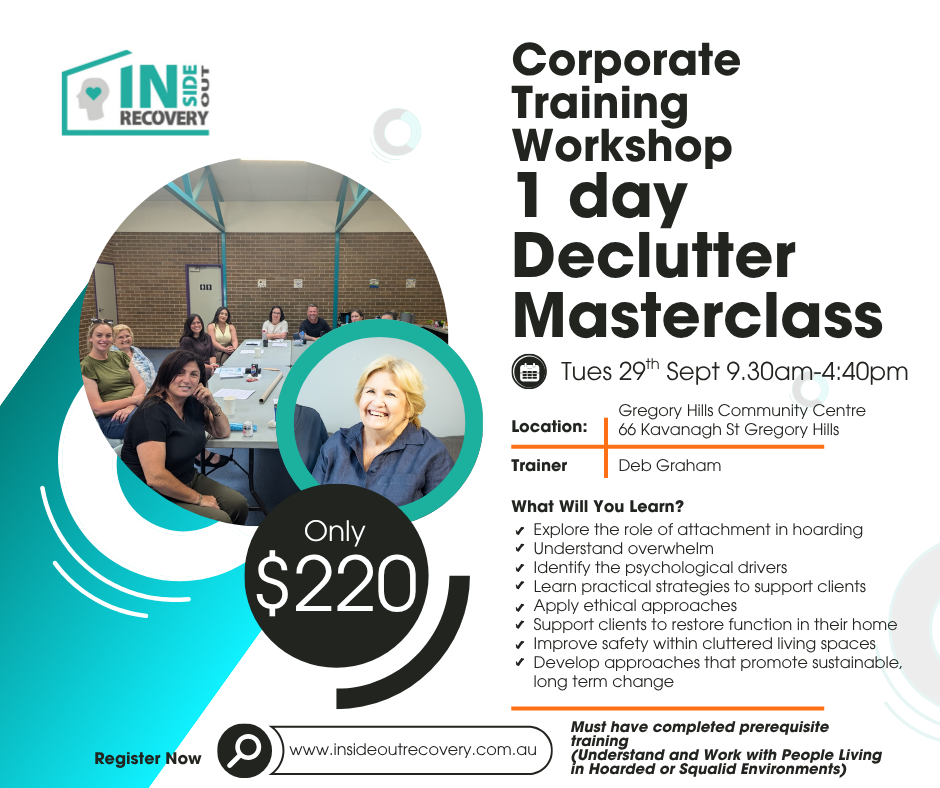
This 1 day The Masterclass is the practical application: the scripts, strategies, and hands on skills workers need to support clients with emotional attachment, avoidance, and entrenched behaviours, experiencing emotional attachment, avoidance, shame, and overwhelm. Includes scripts, strategies, session structure, and guided practice.
Learning Outcomes
Apply practical, trauma‑informed skills in one‑on‑one client work
Work effectively with emotional attachment
Navigate avoidance, overwhelm, and stuck points
Understand Duty of Care vs Dignity of Risk in real scenarios
Strengthen professional boundaries and sustainable self‑care
Build collaborative, respectful partnerships with clients
Next Dates
Tuesday 29th Sept 2026
Time: 9:30am - 4:30pm
Location: Gregory Hills Community Centre—66 Kavanagh St Gregory Hills
Cost $220
(Or bundle with 1 day Understand and work with people living in a hoarded or squalid environment on Monday 28th Sept for $410, and save $30)
Note: Prerequisite Training
To get the most from the Masterclass, participants must have completed at least one full day of “Understanding Hoarding & Squalor” training.
The Masterclass does not cover “What is Hoarding?” Instead, it focuses entirely on practical application, engagement skills, and intervention strategies. Completing the foundational training ensures you are fully prepared to progress.
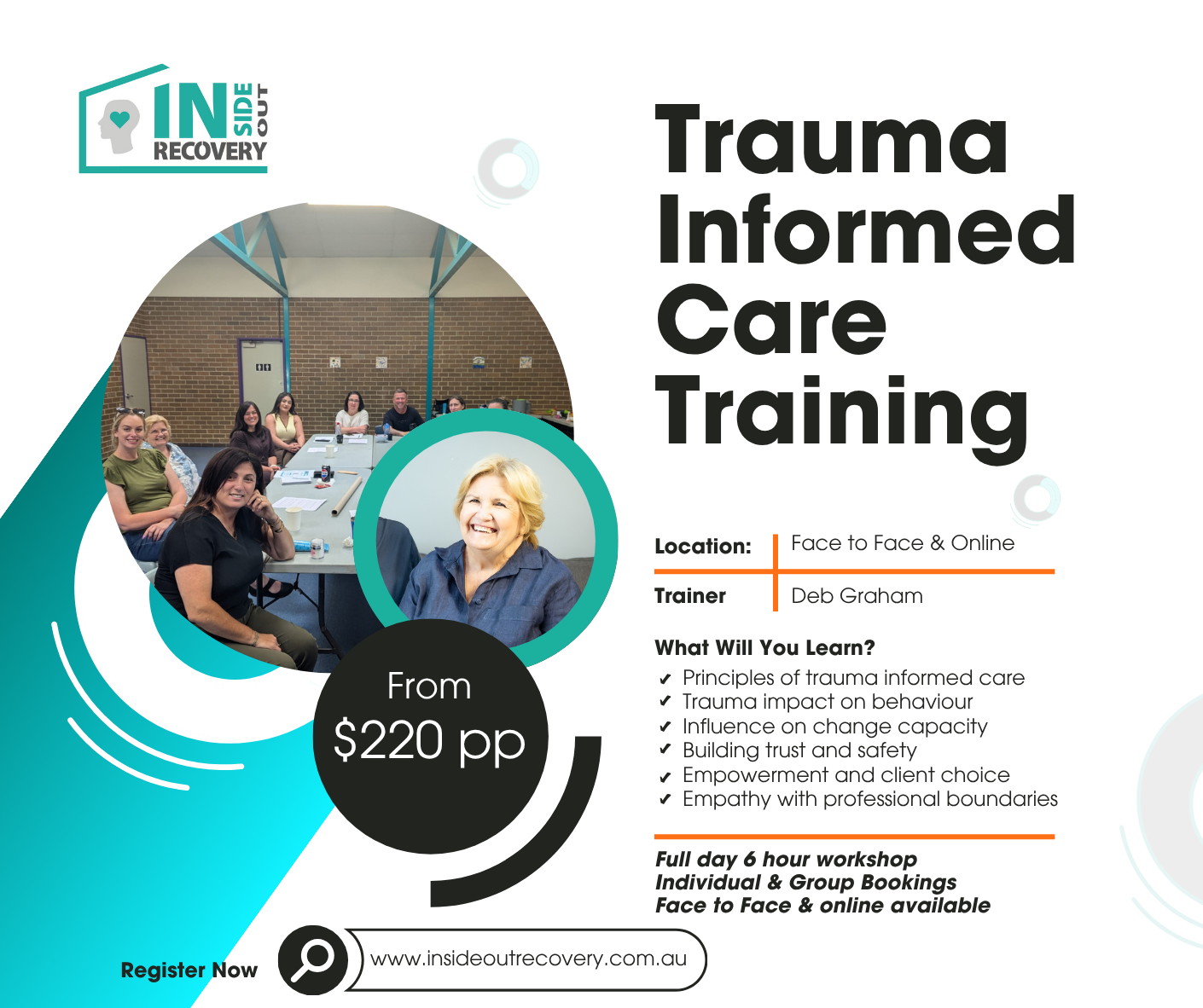
Trauma informed care is critical when supporting someone with a lived experience of mental health. This training will provide the participant with an understanding of trauma, its impact on clients and how to support and build their capacity for change and acceptance
Learning Outcomes
By the end of this training, participants will be able to:
Understand the core principles of trauma informed care and why it is essential when supporting individuals with lived experience of mental health
Recognise the impact of trauma on a person’s thoughts, behaviours, and engagement with services
Identify common trauma responses and how they may present in practice
Apply trauma informed approaches to support safe, respectful, and person centred interactions
Build trust and rapport with clients through empathy, consistency, and appropriate communication strategies
Support individuals to strengthen their capacity for change, self regulation, and acceptance
Reflect on their own practice and responses when working with trauma affected individuals
Full day 6 hour Workshop
Group Bookings: Min 6 people, max 20
To book or enquire about this training for yourself or for your organisations staff call Debbie Graham Ph: 0499 326 192
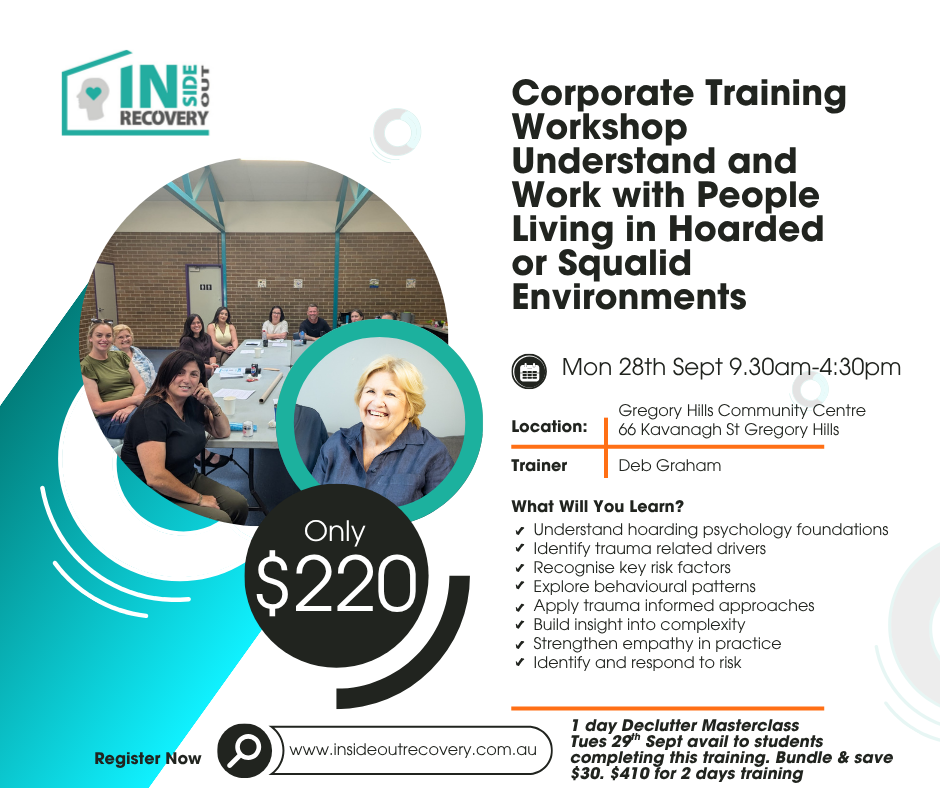
This 1 day Workshop provides the theoretical foundations of working with people living in hoarded & squalid environments, the psychology, trauma dynamics, risk factors, and behavioural patterns behind hoarding and squalor.
A deep, trauma informed exploration of the emotional, psychological, and behavioural drivers behind hoarding and squalor.
Workers gain the insight, empathy, and frameworks needed to understand complexity, reduce stigma, and recognise risk.
Learning Outcomes
Understand the psychological foundations underpinning hoarding and squalor
Identify trauma dynamics and their role in the development and maintenance of hoarding behaviours
Recognise key risk factors associated with hoarding and severe domestic squalor
Explore common behavioural patterns linked to hoarding and squalor presentations
Develop a trauma informed understanding of the emotional and psychological drivers behind hoarding
Build insight into the complexity and multifaceted nature of hoarding and squalor
Strengthen empathy when working with individuals experiencing hoarding and squalor
Apply practical frameworks to support assessment and intervention
Reduce stigma through informed, compassionate practice
Identify and respond to risk factors to support safer outcomes for clients and communities
Next dates:
Monday 28th September 2026
Time: 9:30am - 4:30pm
Location: Gregory Hills Community Centre—66 Kavanagh St Gregory Hills
Cost $220
(Or bundle with 1 day Declutter Masterclass on Tuesday 29th Sept for $410, and save $30)